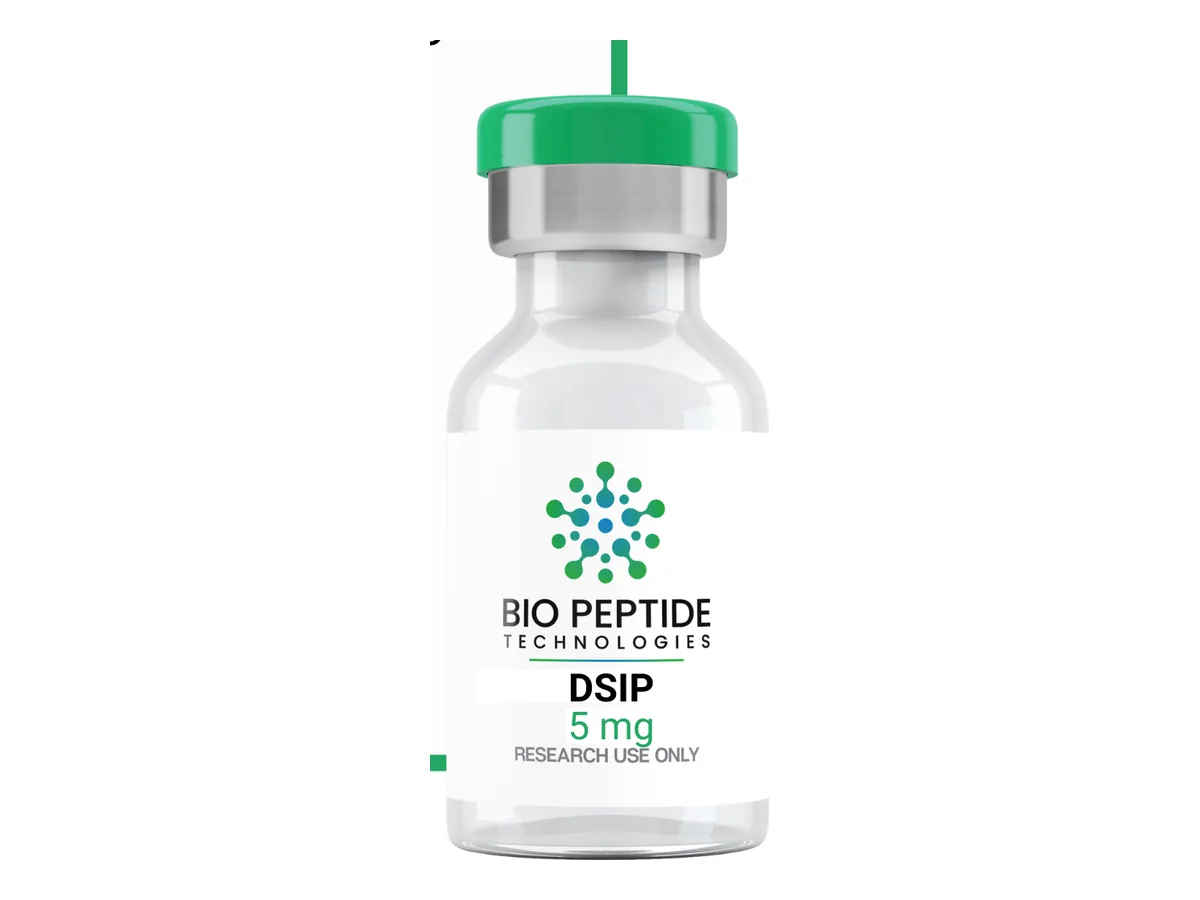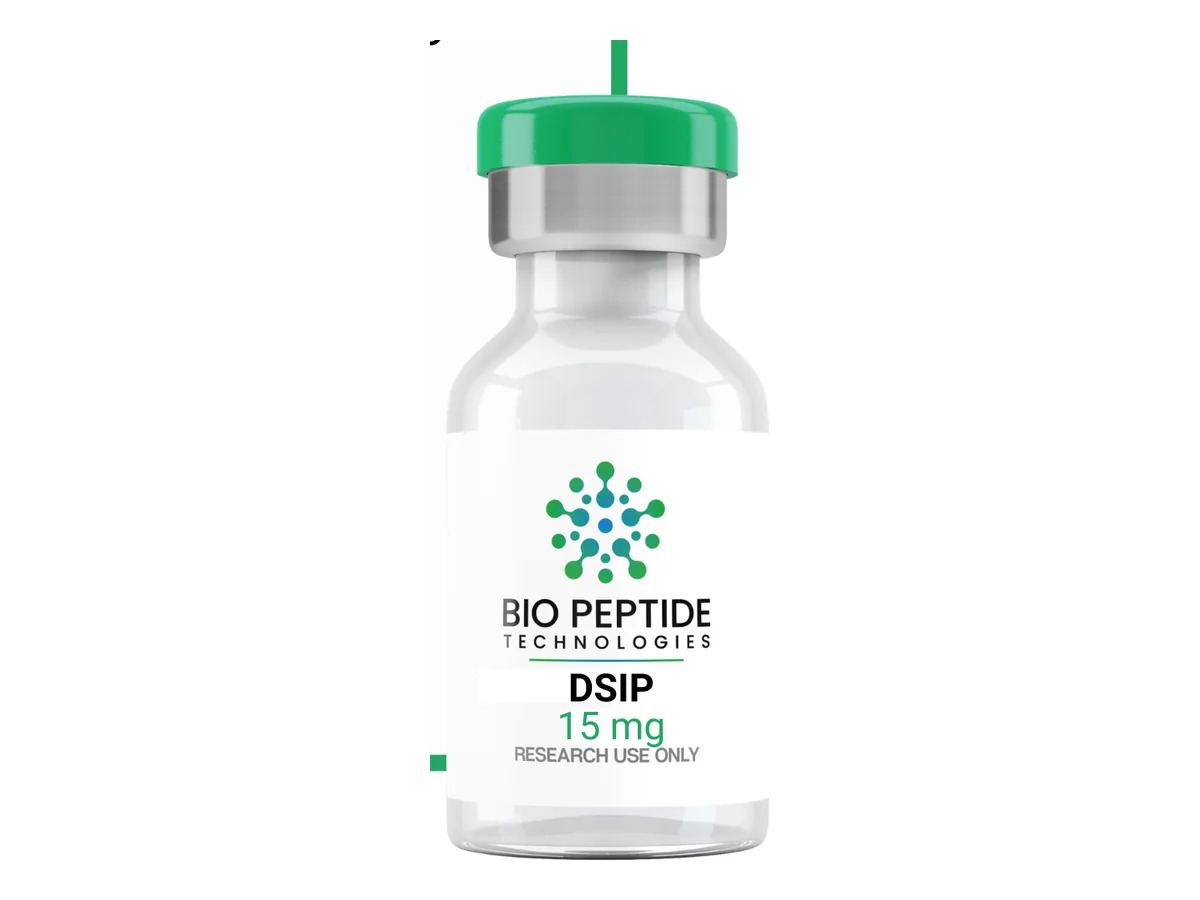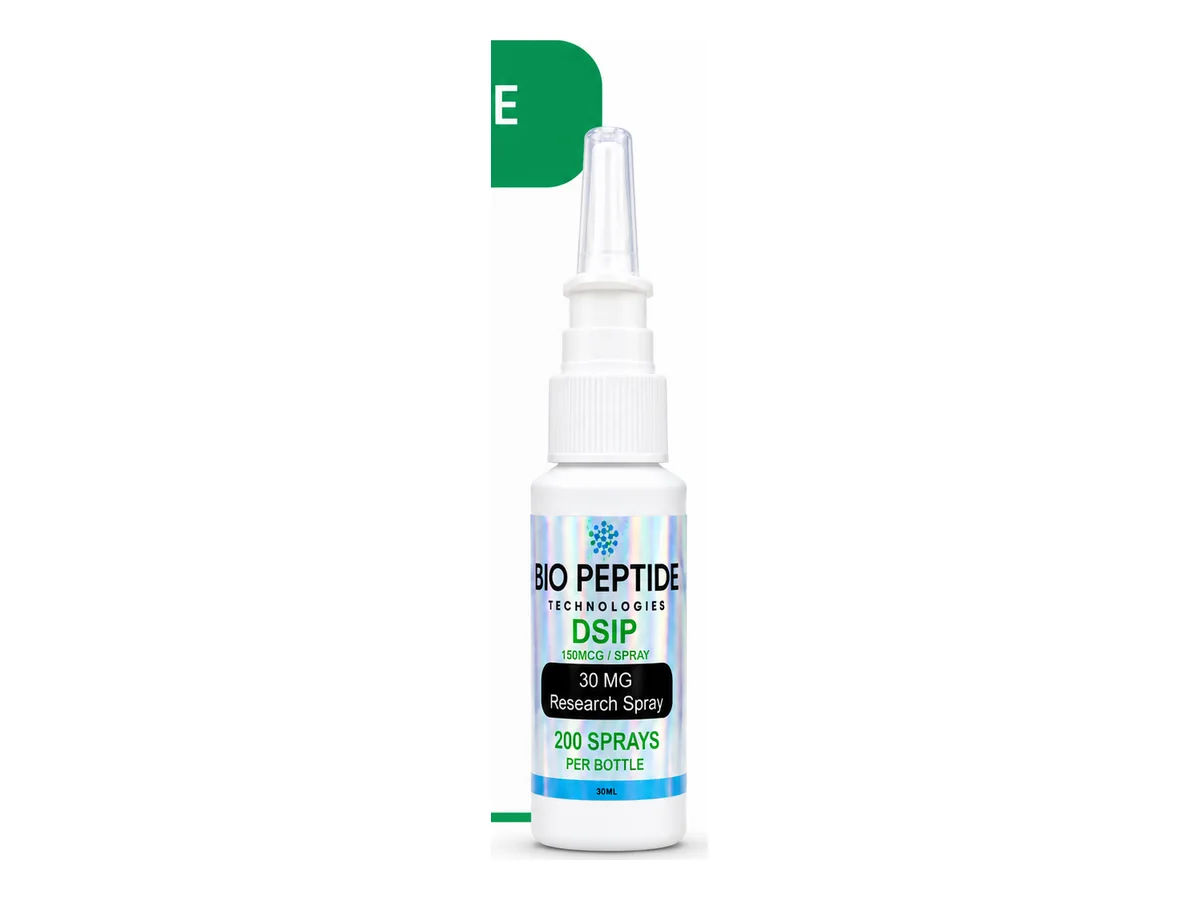
For qualified non-clinical research buyers, including independent researchers, educators, analysts and research teams. Not for human or veterinary use.

Research evidence guide

DSIP research starts with sequence—not the name.

A buyer-focused evidence map for delta sleep-inducing peptide, separating the original nonapeptide record, later experimental literature and current research formats.

Evidence snapshotThe original DSIP record describes the nonapeptide Trp-Ala-Gly-Gly-Asp-Ala-Ser-Gly-Glu. A later review called its natural occurrence and biological role unresolved.[1][2]

Compare current prices and formats.

For qualified non-clinical research buyers. Not for human or veterinary use.

Disclosure: We may earn a commission from purchases made through our links.

Define the material before comparing evidence

The 1977 characterization paper reported a nine-residue sequence for delta sleep-inducing peptide: Trp-Ala-Gly-Gly-Asp-Ala-Ser-Gly-Glu. The investigators compared synthetic DSIP with fragments, analogues and a related tripeptide in a rabbit electroencephalography experiment.[1] Those materials are not interchangeable.

Identity evidenceThe foundational record supplies a sequence and distinguishes DSIP from several fragments and sequence variants.[1]
Biological uncertaintyA 2006 review said the proposed link with sleep remained weakly documented and that natural occurrence and biological activity were still obscure.[2]

The name overstates the certainty

“Delta sleep-inducing peptide” is a historical name, not a settled product-performance statement. The 2006 review noted that a DSIP gene, protein and related receptor had not been isolated and discussed the possibility that DSIP-like immunoreactivity could reflect another peptide or peptides.[2]

Evidence boundary: a shared acronym does not establish sequence identity, purity, stability, biological activity or equivalence between a publication’s test material and a current seller lot.

Read small human studies conservatively

A 1992 double-blind matched-pairs study included 16 people with chronic insomnia. Its authors described statistically significant effects as weak and potentially influenced by an incidental placebo-group change; they concluded that short-term treatment was not likely to be of major therapeutic benefit.[3] This small historical study does not establish a modern clinical use or substantiate a seller product.

Keep later animal findings in their model

A 2021 rat focal-stroke experiment reported a motor-test difference after an eight-day intervention, while the difference in infarction volume was not statistically significant.[4] This is animal-model evidence involving a particular experimental procedure. It cannot support human, veterinary or seller-product outcome claims.

Procurement essentials

  • Require the exact sequence and molecular identity rather than relying on the DSIP acronym.
  • Record quantity, physical format and the source-observation date for each listing.
  • Check whether lot documentation identifies sequence, analytical methods and the tested lot; do not infer a match from a generic document.
  • Evaluate liquid and powder formats as distinct procurement records with their own composition, stability and storage documentation.
  • Keep literature citations separate from seller-specific specifications and lot evidence.

Sources

  1. Monnier M, et al. Characterization of a delta-electroencephalogram (-sleep)-inducing peptide. PNAS. 1977. PMID 265572.
  2. Kovalzon VM, Strekalova TV. Delta sleep-inducing peptide (DSIP): a still unresolved riddle. J Neurochem. 2006. PMID 16539679.
  3. Schneider-Helmert D. Effects of delta sleep-inducing peptide on sleep of chronic insomniac patients: a double-blind study. Neuropsychobiology. 1992. PMID 1299794.
  4. Savić K, et al. Delta Sleep-Inducing Peptide Recovers Motor Function in SD Rats after Focal Stroke. Molecules. 2021. PMID 34500605.