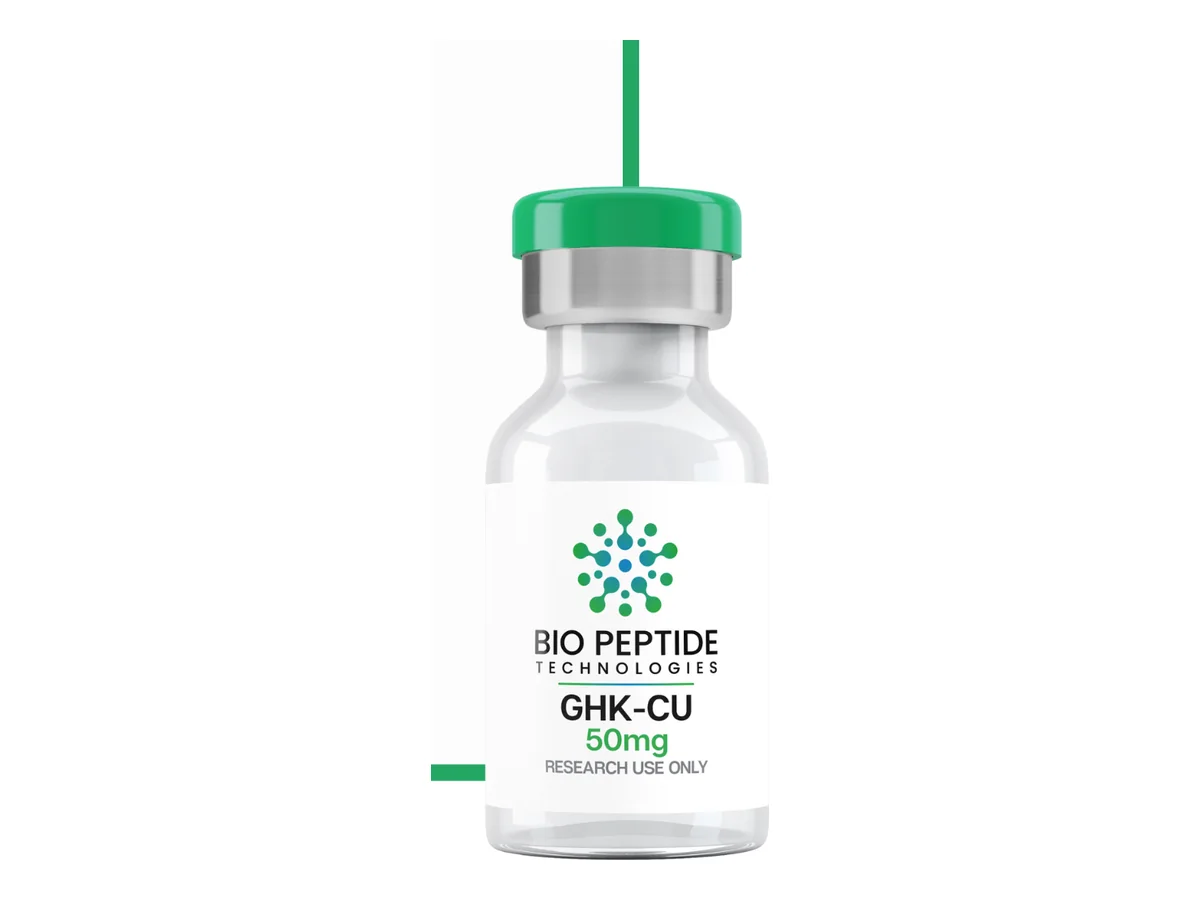
Research evidence guide
GHK-Cu: findings, gaps and research questions.
A practical map of the published evidence, the translational limits and the documentation questions to resolve before comparing research formats.
Evidence snapshotA 2026 systematic review included 20 studies—18 preclinical studies and two randomized controlled trials—and highlighted methodological variability and limited well-designed clinical evidence.[2]
Compare current prices and formats.
For qualified non-clinical research buyers. Not for human or veterinary use.
Disclosure: We may earn a commission from purchases made through our links.
GHK-Cu research spans several experimental systems
A 2015 review described work involving extracellular-matrix components, fibroblasts, immune and endothelial cells, and wound-repair models across several species.[1] These findings map research questions; they do not validate the identity or performance of any commercial product.
Common research themesExtracellular-matrix regulation, metalloproteinase activity, cellular proliferation, signaling and experimental tissue-remodeling models.[1][2]
Central evidence limitThe literature mixes formulations, delivery systems, experimental models and endpoints, making translation and product-to-product comparison difficult.[2]
Preclinical findings are not product claims
The 2026 systematic review reported that 18 of 20 included studies were preclinical. Its authors also called for larger controlled trials with standardized formulations and methods.[2] PRX therefore does not turn those findings into efficacy, cosmetic, therapeutic or safety claims for BioPepTitech listings.
Important distinction: “GHK,” “GHK-Cu” and a specific seller lot are not interchangeable evidence objects. A paper can explain a research topic, but current product identity, composition and lot documentation must be evaluated separately.
Mechanistic literature still requires careful interpretation
A 2024 commentary discussed GHK in relation to myofibroblast function, extracellular-matrix deposition and integrin-β1 signaling.[3] Commentary and mechanistic hypotheses can guide experimental design, but they are not substitutes for controlled product-specific validation.
A procurement checklist for research teams
- Confirm whether the protocol calls for GHK, a copper complex, or another related identity.
- Match the listed strength and formulation to the approved research protocol.
- Request current lot documentation and examine the stated analytical methods.
- Confirm storage requirements, lot identifiers, acceptance criteria and receipt records.
- Verify shipping eligibility, fulfillment terms and returns before ordering.
Compare current GHK-Cu research formats
The catalog options below are for qualified non-clinical research procurement. Inclusion does not mean PRX independently verified a lot or that findings from the cited literature apply to a seller product.