Research evidence guide
GHRP-2 and GHRP-6: compare identities before assays.
A cited buyer guide to two distinct hexapeptides, GHSR1a assay evidence, model-specific limitations and current non-clinical research formats.
Evidence snapshotGHRP-2 and GHRP-6 are distinct synthetic hexapeptides with different chemical structures. A family name or shared assay target does not make their identities, activities or seller materials interchangeable.[1][2][3]
Compare current prices and formats.
For qualified non-clinical research buyers. Not for human or veterinary use.
Disclosure: We may earn a commission from purchases made through our links.
Two names, two chemical identities
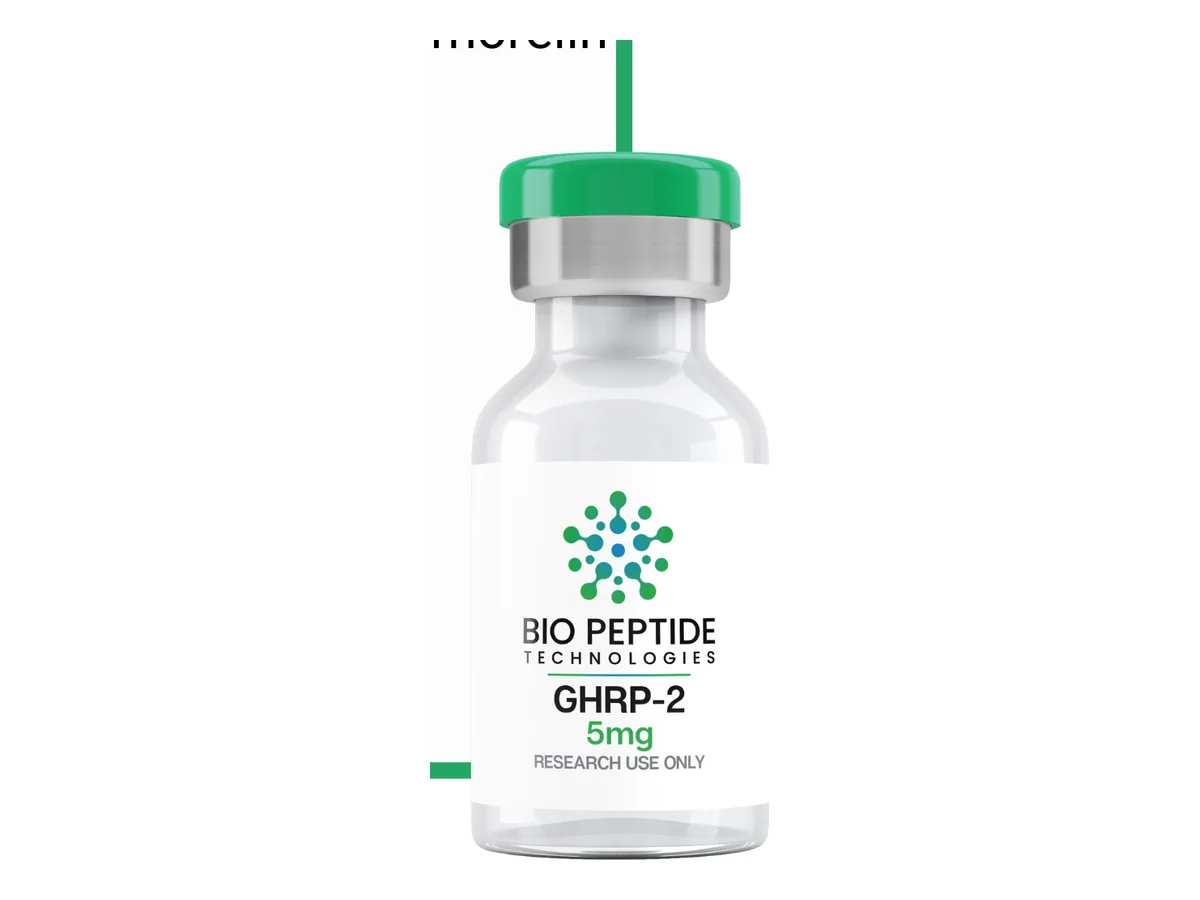
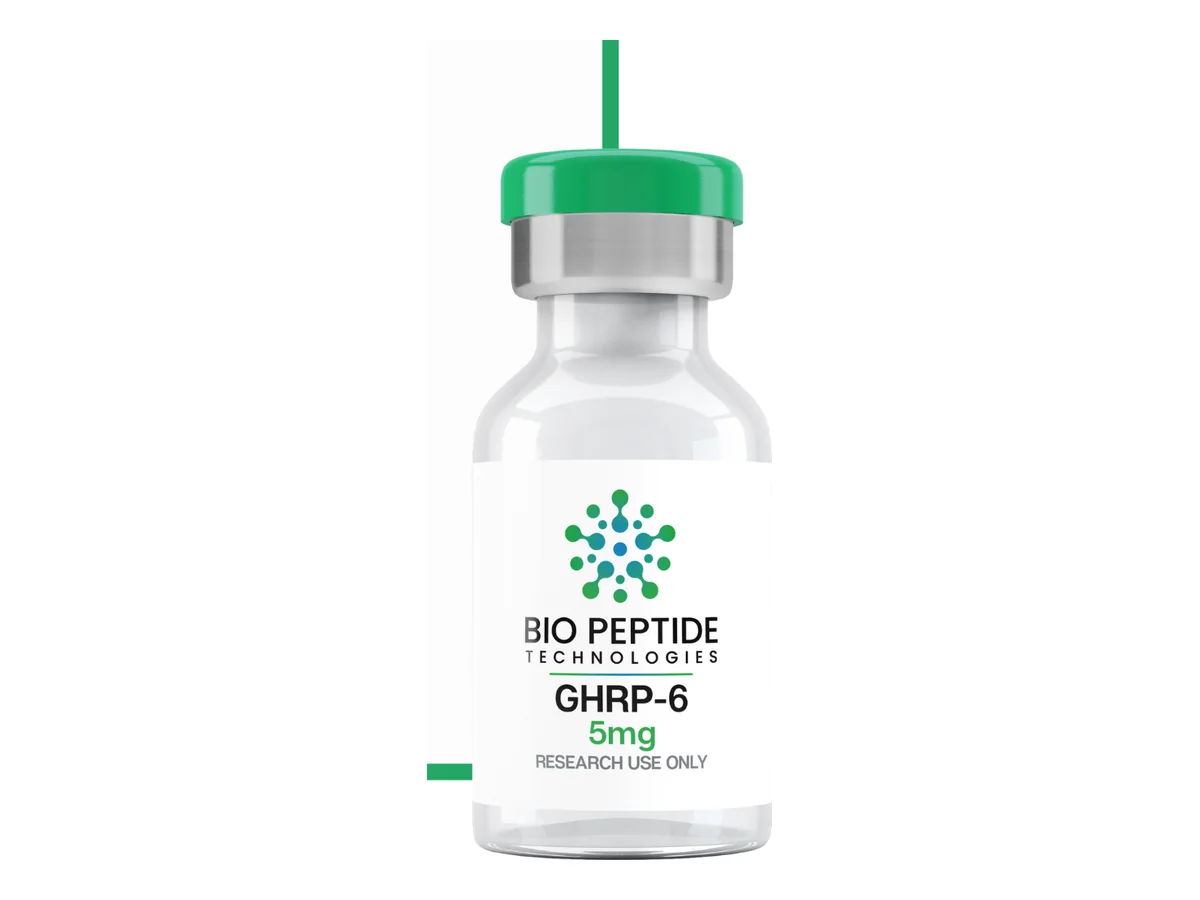
PubChem identifies GHRP-2 as pralmorelin (CID 6918245; molecular formula C45H55N9O6) and records GHRP-6 separately as CID 4345065 (molecular formula C46H56N12O6).[1][2] These database records establish reference structures, not the identity, salt or counterion, quantity basis, purity, stability or performance of a seller lot.
Chemical database evidenceStructure records are useful identity references.[1][2] They do not authenticate the material received by a laboratory.
Family-level terminologyBoth names appear within the synthetic growth-hormone-releasing peptide literature. That shared family label does not support substitution between the two compounds or between studies.
GHSR1a binding is an assay result, not complete equivalence
A 2017 structure–activity study used a radiocompetitive assay against radioactive ghrelin to examine binding at GHSR1a for several intact GHRPs and related metabolites, including GHRP-2 and GHRP-6.[3] The work supports assay-specific comparison across a defined test system. It does not establish equal potency across methods, comprehensive selectivity, organism-level outcomes or the properties of a commercial material.
Evidence boundary: chemical structures, membrane binding, engineered-cell signaling, primary-cell release assays and animal experiments answer different questions. Results should remain attached to the material, model, endpoint and conditions actually studied.
Comparative experiments depend on model and endpoint
A 1998 study compared GHRP-2 and GHRP-6 alongside ipamorelin in primary rat pituitary cells and animal experiments. The reported relative potency and efficacy varied with the system and measured endpoint.[4] Those experiments can inform model selection; they are not a basis for a human-use claim or for assuming that two seller listings are experimentally interchangeable.
Binding-site and signaling studies add different layers
A human-tissue membrane study used radiolabeled Tyr-Ala-hexarelin and found that unlabeled synthetic secretagogues, including GHRP-2 and GHRP-6, displaced binding in pituitary and hypothalamic membrane preparations.[5] A separate GHRP-6 study used infant-rat anterior pituitary cultures and engineered HEK293 cells expressing the secretagogue receptor to investigate transcriptional signaling.[6] Tissue binding and engineered-cell signaling are distinct evidence types and neither authenticates a seller lot.
Off-target conclusions must stay panel-limited
A 1997 receptor-panel experiment examined GHRP-6 at four human melanocortin receptor subtypes in a transient-expression cell system and reported low-affinity observations at MC1 and MC5.[7] This does not establish a comprehensive selectivity profile, and it provides no direct evidence about GHRP-2. Procurement teams should avoid turning one limited panel into a broad “selective” or “nonselective” label.
Procurement checks for GHRP-2 and GHRP-6
- Match the requested compound to the exact name and reference structure; do not order by the family acronym alone.
- Record the documented sequence or structure, stereochemistry, termini, salt or counterion, quantity basis and formulation when supplied.
- Match current lot documentation to the exact listing and received lot; literature and database records are not lot evidence.
- Define the receptor construct, assay format, controls, matrix, endpoint and acceptance criteria in the laboratory protocol.
- Check current seller price, availability, shipping eligibility, fulfillment terms and institutional receiving controls before ordering.
Review current research formats
The cards below use current seller-catalog title, format, price and availability facts retrieved during generation. The literature above does not establish the identity, quality, purity, stability, performance or results of either seller product.
Sources
- PubChem Compound Summary: Pralmorelin, CID 6918245 — GHRP-2 structure-level chemical database record.
- PubChem Compound Summary: GHRP-6, CID 4345065 — GHRP-6 structure-level chemical database record.
- Structure-activity relationship for peptidic growth hormone secretagogues — radiocompetitive GHSR1a assay study.
- Ipamorelin, the first selective growth hormone secretagogue — primary rat-pituitary and animal-model comparison including GHRP-2 and GHRP-6.
- Specific receptors for synthetic GH secretagogues in the human brain and pituitary gland — human-tissue membrane-binding study.
- Regulation of Pit-1 expression by ghrelin and GHRP-6 through the GH secretagogue receptor — rat primary-cell and engineered-cell signaling study.
- Characterization of the binding of MSH-B, HB-228, GHRP-6 and 153N-6 to the human melanocortin receptor subtypes — limited receptor-panel binding study.