Research evidence guide
SS-31 research: verify identity before comparing evidence.
A cited guide to SS-31 and elamipretide terminology, membrane assays, cell and animal models, clinical evidence limits, and current non-clinical research formats.
Evidence snapshotSS-31 is commonly discussed in the literature as elamipretide, a synthetic tetrapeptide. A shared name does not authenticate a seller lot or establish sequence, stereochemistry, salt form, composition or experimental performance.[1][2]
Compare current prices and formats.
For qualified non-clinical research buyers. Not for human or veterinary use.
Disclosure: We may earn a commission from purchases made through our links.
Start with the exact material
PubChem records elamipretide as CID 11764719 with molecular formula C32H49N9O5 and a defined stereochemical structure.[1] Research papers frequently place “SS-31” and “elamipretide” together, but a catalog name alone does not establish that a seller material matches that database record or a publication’s test article.[2]
Chemical identity recordPubChem supplies a structure-level reference for elamipretide.[1] It does not verify the identity, salt or counterion, quantity, composition or lot documentation of a current seller listing.
Biophysical evidenceA membrane study used model and mitochondrial membranes plus computational methods to examine SS-31 interactions with charged lipid bilayers.[2] Those measurements are assay observations, not a seller-product specification.
Membrane interaction is a model-specific result
The 2020 biophysical study reported that SS-31 partitioned into membrane interfacial regions in relation to surface charge and altered measured lipid packing and surface electrostatics.[2] The authors proposed more than one possible mechanism. Model-membrane behavior does not by itself establish a unique biological target, organism-level effect or performance of another material.
Evidence boundary: lipid-bilayer measurements, cultured-cell endpoints, mouse-model findings and randomized clinical endpoints answer different questions. None can be transferred automatically to a seller lot.
Mechanistic claims remain experiment-dependent
A 2024 study used a genome-wide CRISPR screen in a human kidney-derived cell model, follow-up knockout and knockdown experiments, biochemical interaction work and mouse kidney-injury models.[3] It identified phospholipid scramblase 3 as necessary for the reported SS-31 effects in those systems. This does not resolve every proposed mechanism, establish comprehensive target selectivity or verify a commercial material.
A separate structure–activity study compared SS-31 with three tetrapeptide analogues using NMR, molecular dynamics, membrane assays, mammalian cell targeting and serum-withdrawal cell-stress models.[4] Differences among the analogues show why sequence register and aromatic side-chain composition should not be treated as interchangeable.
Clinical evidence should not be flattened into a benefit claim
The 2023 MMPOWER-3 randomized, double-blind, placebo-controlled trial enrolled 218 adults with genetically confirmed primary mitochondrial myopathy and evaluated a specifically studied elamipretide intervention.[5] The study did not meet either primary efficacy endpoint at 24 weeks. This trial concerns its defined clinical test article, population, route and endpoints; it neither substantiates a research-use seller SKU nor supports personal use.
Procurement checks for an SS-31 listing
- Confirm whether the requested material is identified as SS-31, elamipretide or another Szeto–Schiller peptide.
- Record sequence, stereochemistry, termini, salt or counterion and the basis used for stated quantity when documentation provides them.
- Match current lot documentation to the exact listing, quantity and received lot; do not substitute a general literature citation for lot evidence.
- Define fit-for-purpose analytical and acceptance criteria in the laboratory’s own protocol.
- Confirm current price, availability, shipping eligibility, fulfillment terms and institutional receiving controls before ordering.
Compare current research formats
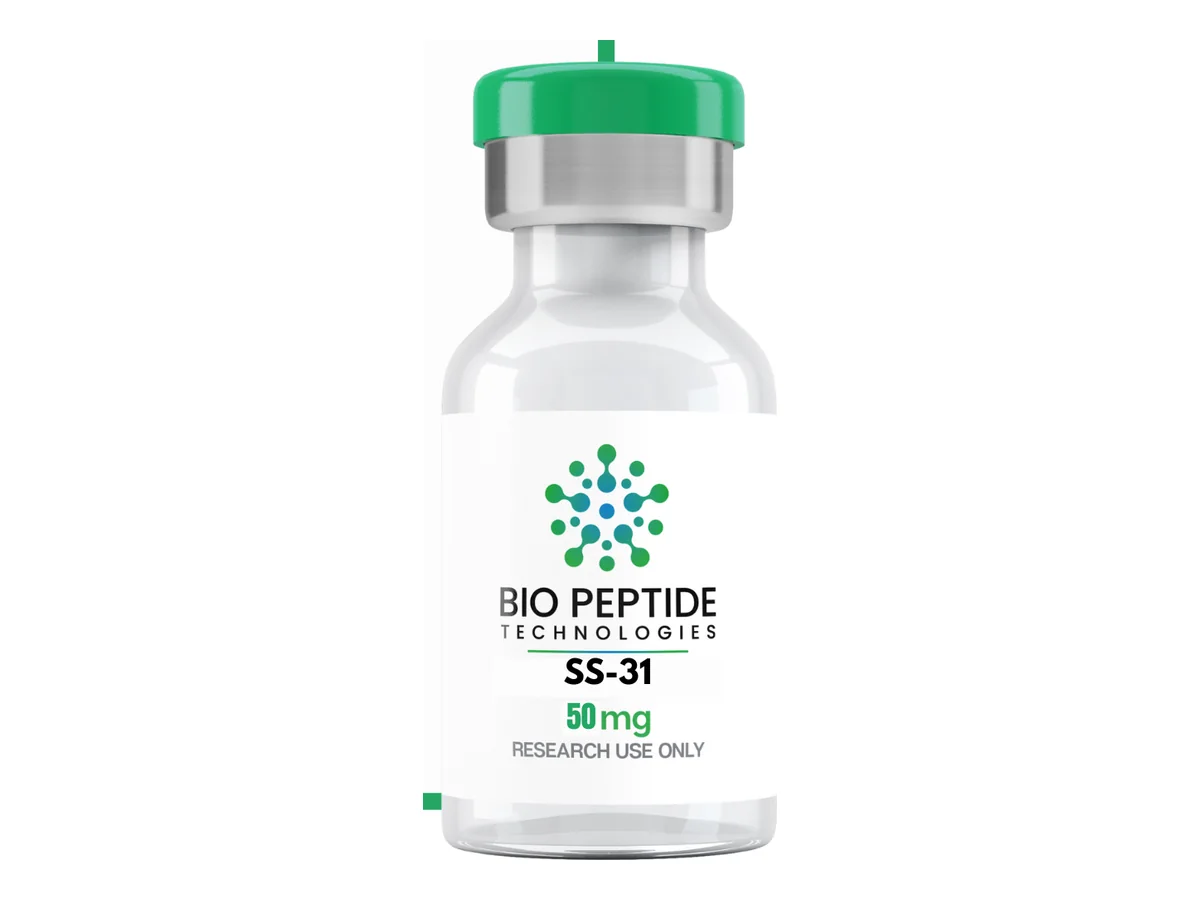
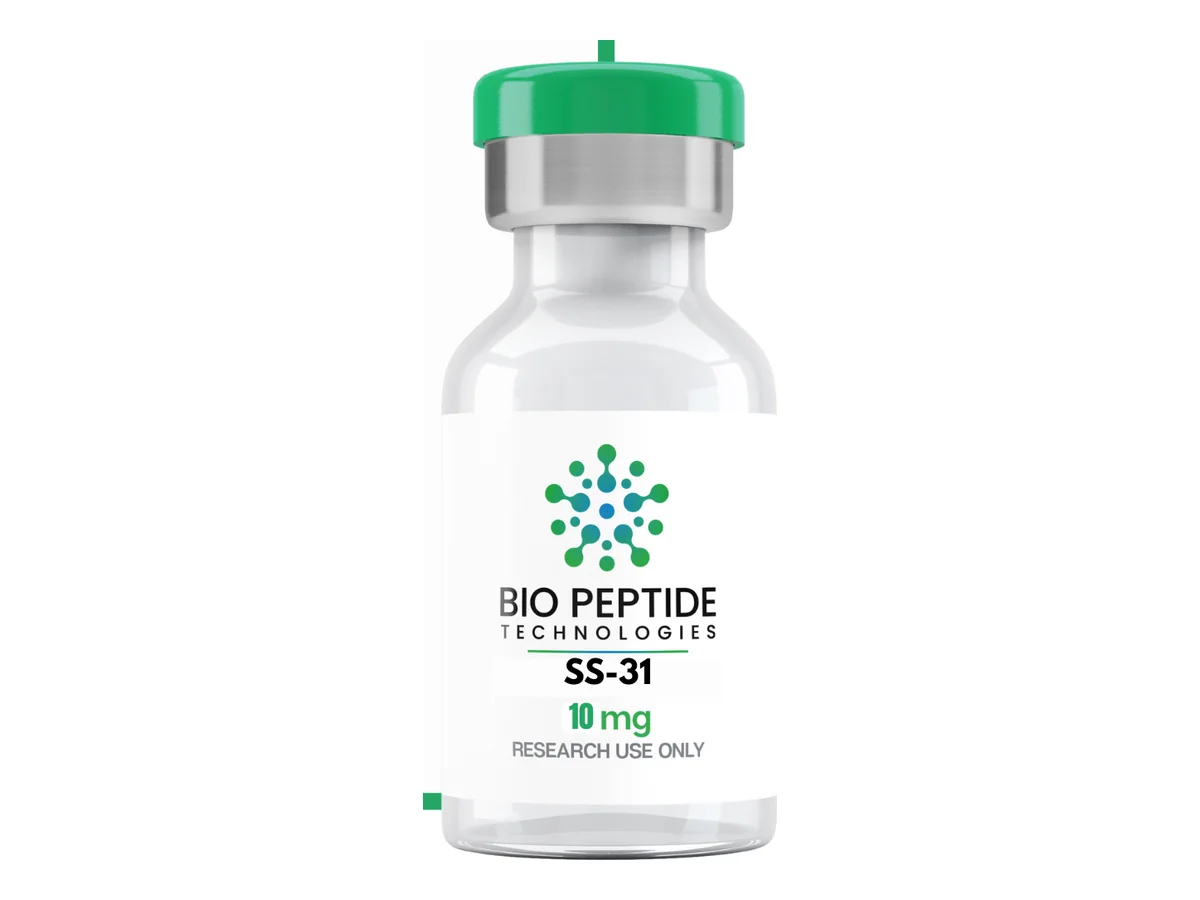
The listings below are current seller-catalog facts retrieved during generation and are shown only for qualified non-clinical research procurement. The literature above is not evidence of the identity, quality, purity, stability, performance or results of either seller product.
Sources
- PubChem Compound Summary: Elamipretide, CID 11764719 — chemical database record.
- The mitochondria-targeted peptide SS-31 binds lipid bilayers and modulates surface electrostatics as a key component of its mechanism of action — biophysical and computational membrane study.
- Genome-Wide CRISPR Screen Identifies Phospholipid Scramblase 3 as the Biological Target of Mitoprotective Drug SS-31 — cell, biochemical and mouse-model study.
- Structure-activity relationships of mitochondria-targeted tetrapeptide pharmacological compounds — NMR, membrane and cell-model comparison.
- Efficacy and Safety of Elamipretide in Individuals With Primary Mitochondrial Myopathy: The MMPOWER-3 Randomized Clinical Trial — phase 3 randomized clinical trial.